Budgeting
How to build a monthly operating budget you can review
A monthly operating budget is a plan for the revenue and operating costs of a month. Build it from expected activity, fixed costs and variable costs, then compare the plan with actual results. Check payment timing separately: budget availability is not bank cash.
Start with the decision, then the records
Decide what the budget should help you answer: can the business take on more work, sustain its current costs, or afford a new recurring commitment? Collect recent transactions, supplier bills, recurring software costs and expected sales. Keep missing information visible instead of entering zero.
The Australian Government’s budgeting guide distinguishes the spending plan from a forecast based on current information. Here, the monthly budget is your agreed baseline; a revised outlook explains what has changed. The worked plan below is an original teaching example for an Indonesian service business.
Separate fixed costs from activity-driven costs
Use a short list of categories your team can apply consistently. A fixed cost stays broadly stable within the relevant activity range, such as a monthly studio lease. A variable cost changes with work, such as freelance editing per completed job. Some costs have both a base fee and usage charges.
- Volume assumption: how many jobs, orders or service days do you expect?
- Price assumption: what revenue and direct cost belong to each unit?
- Timing assumption: when is the service delivered, and when does the money move?
- Owner: who can explain a change in each category?
For an online seller, include platform fees and fulfilment costs when analysing the economics of a sale. Do not treat the net marketplace payout as the complete explanation of sales and fees. For stock purchases and equipment, distinguish cash spending from the expense recognised in the month.
A monthly plan in Rupiah
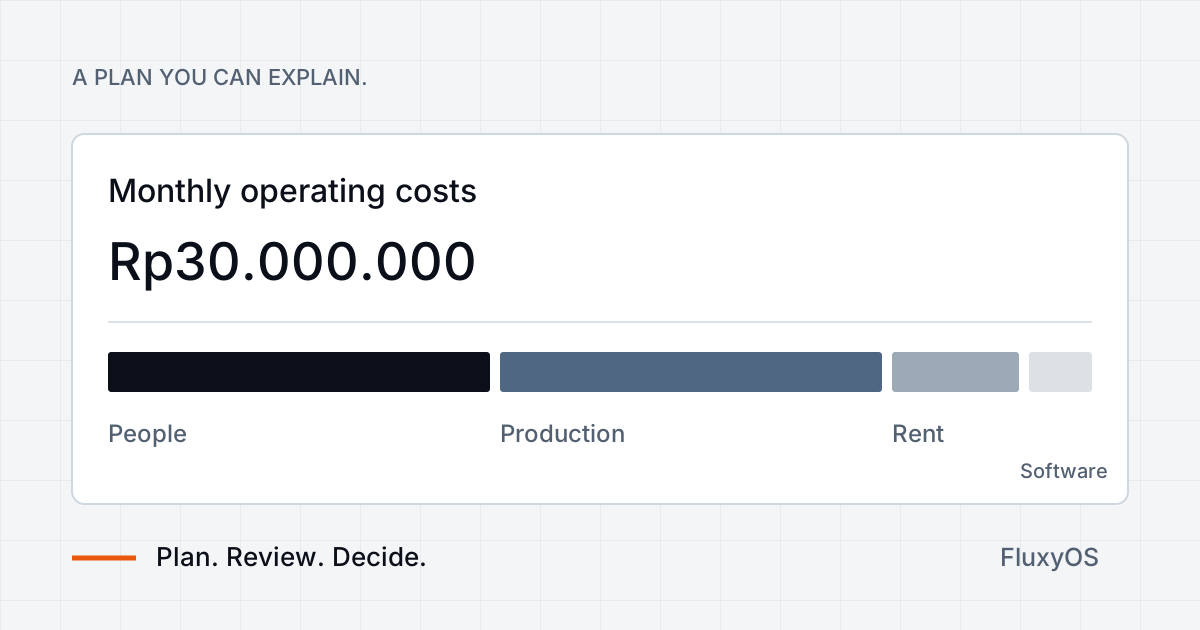
Assume an agency expects eight completed jobs at Rp5.000.000 each. This simplified plan excludes tax, depreciation and financing. The software cost is the month’s expense; any annual payment would need separate cash timing.
| Category | Assumption | Monthly plan |
|---|---|---|
| Revenue | 8 jobs × Rp5.000.000 | Rp40.000.000 |
| Freelance production | 8 jobs × Rp1.500.000 | Rp12.000.000 |
| Salaries | Monthly fixed amount | Rp12.000.000 |
| Rent | Monthly fixed amount | Rp4.000.000 |
| Software | Monthly expense | Rp2.000.000 |
| Total operating costs | Sum of the four cost lines | Rp30.000.000 |
| Operating surplus | Revenue minus operating costs | Rp10.000.000 |
That Rp10.000.000 is a planning result under these assumptions. It is not a cash balance or a promise of profit. If only six jobs are delivered, revenue becomes Rp30.000.000 and freelance costs Rp9.000.000. With the other costs unchanged, the operating surplus falls to Rp3.000.000.
Review actuals and commitments together
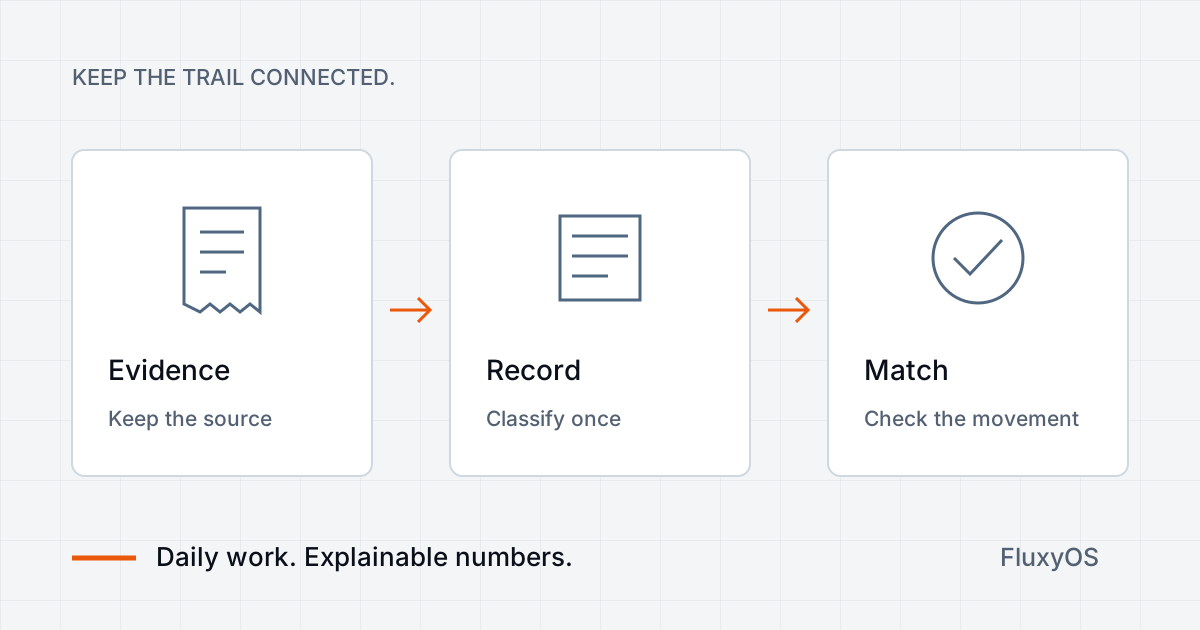
Review the same period and categories each week. Keep the original plan, actual recorded costs, and unpaid commitments in separate columns. A commitment is money already promised but not yet represented in actual spending; it helps explain how much room remains.
Suppose software has a Rp2.000.000 budget, Rp1.200.000 of recorded actual costs and a separate unpaid Rp500.000 bill. Remaining room after both is Rp300.000. When that bill becomes actual spending, remove the commitment so you do not count the same cost twice.
For every meaningful variance, write one sentence about the cause: more jobs, a higher supplier price, a payment recorded in the wrong period, or a missing document. Then name an action and an owner. Reclassifying a cost to hide an overrun makes the next decision harder.
Connect the plan to everyday decisions
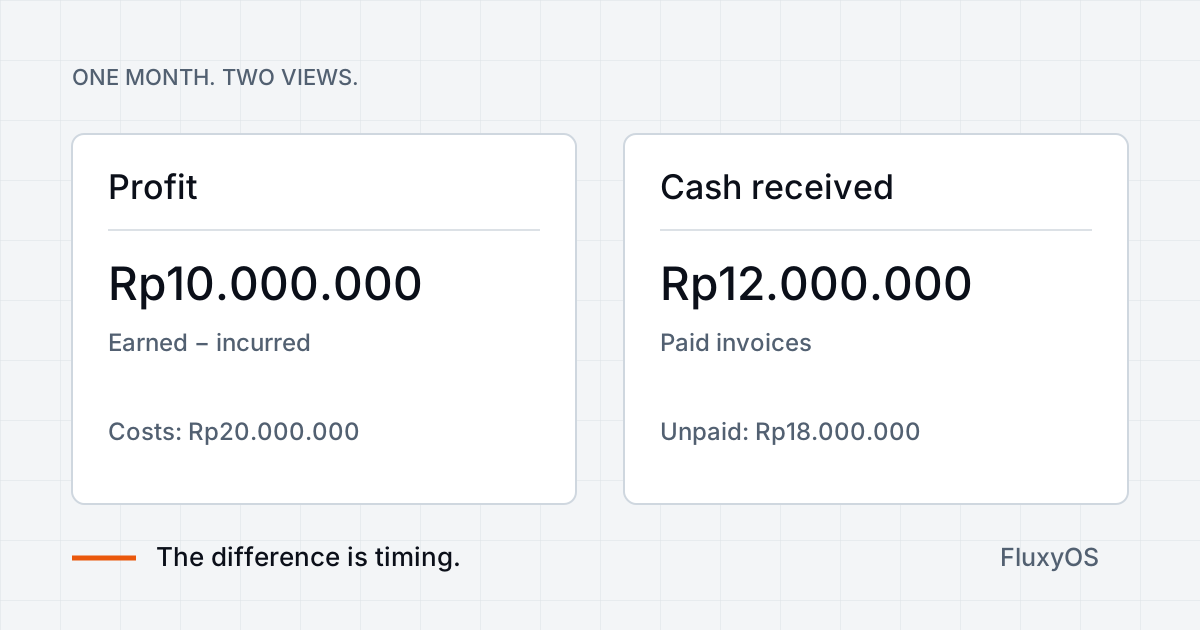
Before a new purchase, ask whether it fits the plan and whether the business can pay on its due date. Use the cash flow vs profit guide for the second question. Use the bookkeeping routine to keep the actuals trustworthy.
In FluxyOS, Dynamic Budgeting supports budgets, allocations, actual usage and recorded commitments. Review the assignment of records and the period before interpreting the remaining allocation. It describes recorded budget usage, not an automatic prediction of next month’s results.
Sources & further context
Source links checked on 19 October 2026. Examples and checklists are original FluxyOS explanations.