Accounting
Bank reconciliation: explain a balance that does not match
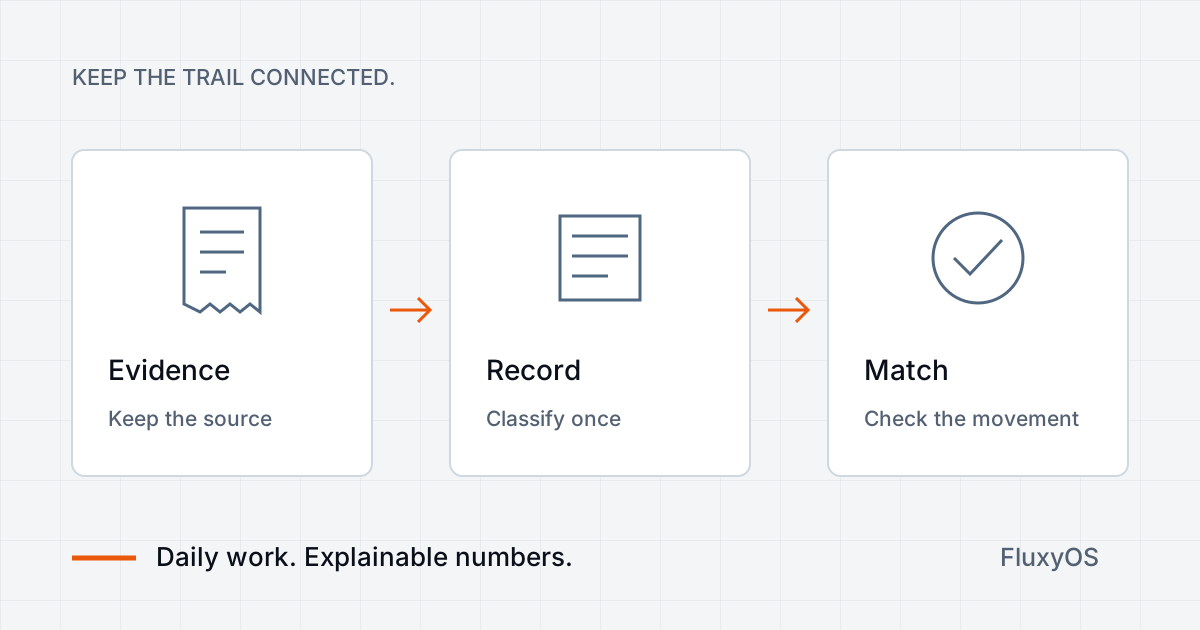
Bank reconciliation compares the statement for one bank account with the business records for that same account and date. Match the movements, investigate every difference, and document any justified corrections. A matching total is useful only when the transactions behind it are explained.
1. Choose one account and one cut-off date
Start with a single business bank account, the bank statement covering the period, the corresponding ledger, and the previous reconciliation. Check the opening balance before reviewing new movements. Use the same closing date on both sides; a live banking balance from today is not a month-end statement.
For example, BCA documents downloadable statements and transaction records in KlikBCA Bisnis. Use the actual statement available for your account and retain the original file. This is an example of a source record, not a claim of a FluxyOS connection to BCA.
Keep invoices, payment references and transfer evidence nearby. A customer invoice explains what is owed; it does not prove that the customer has paid. The daily bookkeeping checklist helps organise those records.
2. Match movements before comparing totals
Build a short worksheet with the statement date, amount, bank reference, counterparty, matching record, and status. Mark each match on both sides so the same line cannot be used twice. Equal amounts alone are insufficient when several customers pay the same price.
For a combined marketplace payout, keep the settlement breakdown with the bank line. Do not assume one payout is one sale. For a transfer between two business accounts, trace both sides; moving your own cash is not a new customer sale.
A useful starting status list is matched, missing record, timing difference, duplicate/error, and unresolved. Keep an owner and next action for every unresolved item.
3. Decide what the difference means
OpenStax explains that bank records and company records can differ because of timing, charges, or errors. A timing item already recorded correctly needs evidence and follow-up; an omitted transaction may need a book entry. Do not apply the same fix to both.
- On the statement, absent from the books: find the underlying receipt, fee or payment and check whether it belongs to this account and period.
- In the books, absent from the statement: check the payment status and subsequent statement. A payment instruction alone does not establish that money has moved.
- Duplicate or wrong amount: trace the source import or original entry before correcting it.
- Unrecognised withdrawal: retain the reference and investigate with the bank and responsible colleague. Do not automatically label it a routine expense.
4. Work through a Rupiah example
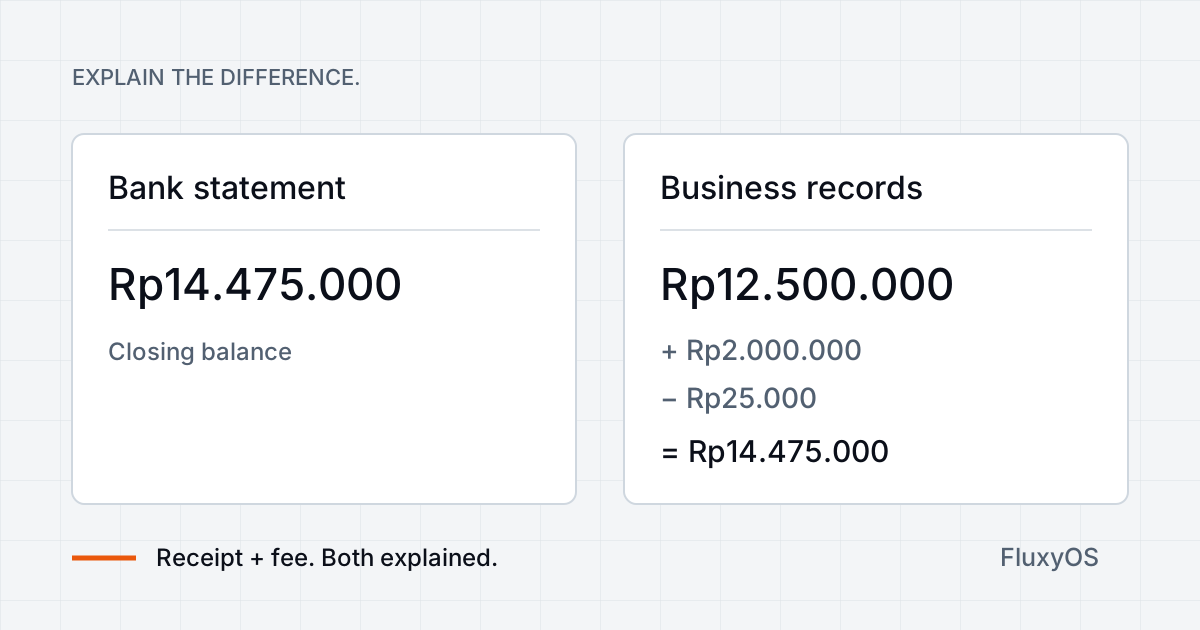
Assume a service business has Rp12.500.000 in its bank ledger at the chosen closing date. The bank statement shows Rp14.475.000. Every line matches except a Rp2.000.000 customer receipt and a Rp25.000 bank fee, both missing from the ledger. The customer invoice was recorded earlier. Assume no timing differences or other errors.
| Step | Bank statement side | Business record side |
|---|---|---|
| Closing balance | Rp14.475.000 | Rp12.500.000 |
| Previously omitted customer receipt | Already included | Add Rp2.000.000 |
| Previously omitted bank fee | Already included | Subtract Rp25.000 |
| Explained closing balance | Rp14.475.000 | Rp14.475.000 |
The difference is Rp1.975.000: Rp2.000.000 − Rp25.000. After verifying the evidence, record the receipt against the existing receivable, rather than recording the sale again. Record the fee separately. No bank-side adjustment is needed in this example.
The arithmetic is a teaching example, not a customer result. It excludes tax, interest, cash deposits in transit and outstanding payment instruments. Your actual worksheet should list each genuine reconciling item rather than reuse these assumptions.
5. Correct the cause and retain the trail
The ACCA reconciliation example distinguishes the statement bridge from corrections to the cash book. Before posting a correction, identify the original record, supporting document, account, date and explanation. Have the responsible person review unclear items.
For the hypothetical receipt above, the accounting entry increases the bank balance and reduces the customer receivable by Rp2.000.000. The separate fee increases bank-fee expense and reduces the bank balance by Rp25.000. These entries follow the example’s stated facts; they are not instructions to classify every unmatched receipt as revenue or every withdrawal as an expense.
If a difference remains, keep it open with evidence, an owner and a follow-up date. A made-up “adjustment” makes the totals equal while leaving the underlying problem unresolved.
6. Carry the explanation into your next decision
Save the original statement, completed worksheet, correction references and open-item list together. At the next review, check that earlier timing items actually cleared. Choose a review frequency that fits transaction volume, and complete a period-end review before relying on the balance in your accounts.
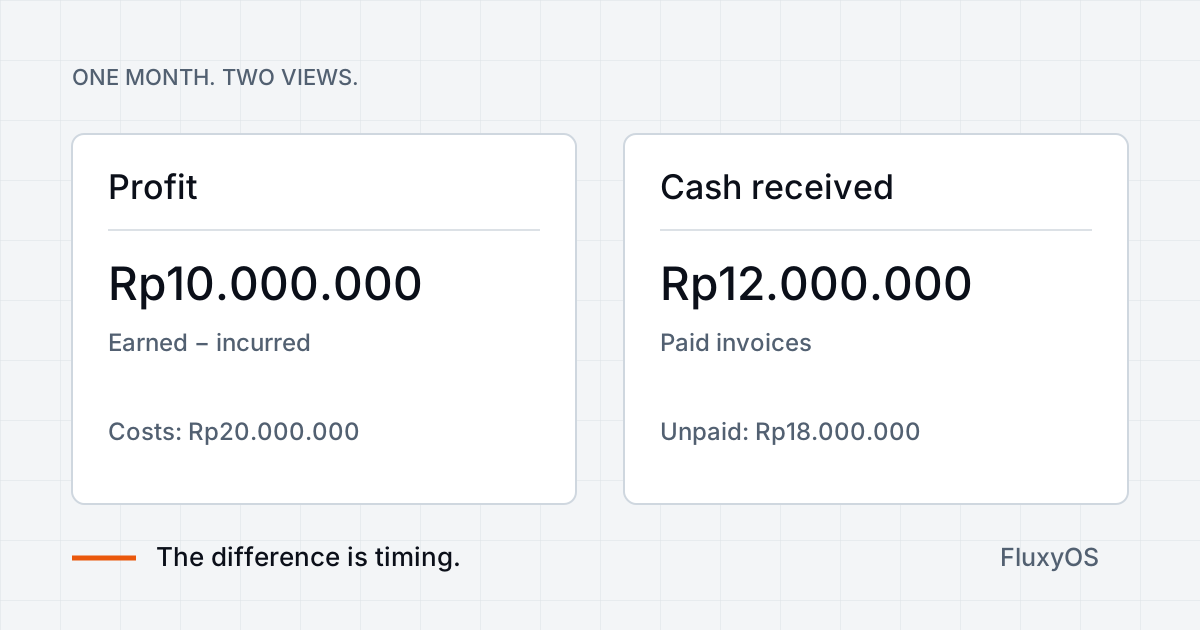
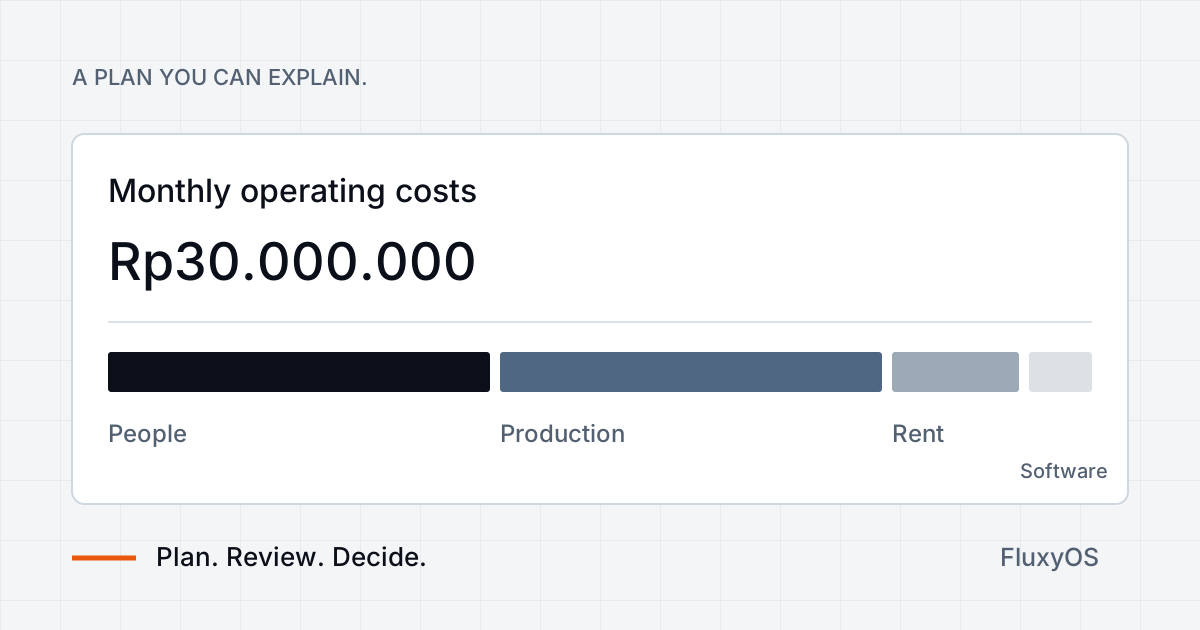
Use the reconciled balance when reviewing cash flow versus profit. Use the operating budget guide to explain recorded spending. For product context, see the FluxyOS accounting overview; this article’s worksheet is a manual process, not a promise of automatic matching or bank connectivity.
Sources & further context
Source links checked on 19 October 2026. Examples and checklists are original FluxyOS explanations.