Bookkeeping
A daily bookkeeping checklist for Indonesian businesses
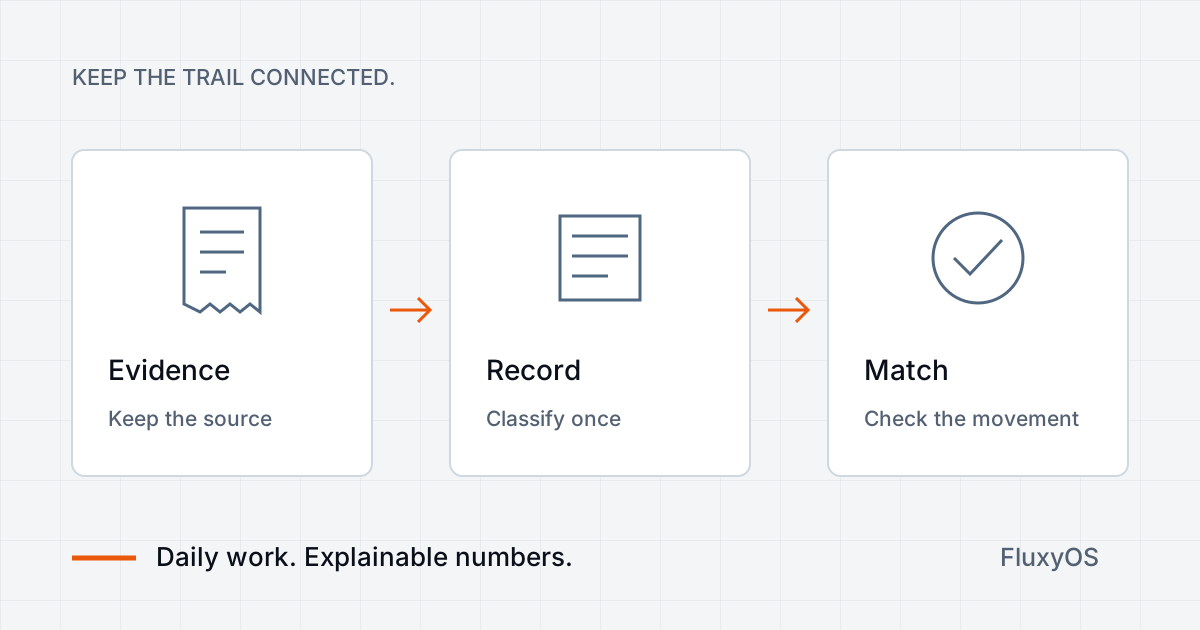
Daily bookkeeping means collecting transaction evidence, recording each business event once, classifying it consistently, and matching money movements to the records. Keep unpaid bills and invoices visible, and investigate differences before you hand the records to accounting.
1. Collect evidence while the context is fresh
Keep sales invoices, supplier bills, receipts, bank transaction references and marketplace settlement details together by business and period. Add the business purpose while someone still remembers it. A bank line shows money movement; a receipt or invoice explains what was bought or sold.
Bank Indonesia’s SIAPIK announcement connects digital transaction recording with financial reporting for Indonesian small businesses. That supports the value of organised records; it does not imply Bank Indonesia endorses FluxyOS. The routine below is our practical editorial checklist.
Use a file name such as 2026-10-19_supplier_receipt-014 so a colleague can locate the original. Store files where authorised colleagues can retrieve them, and keep a backup. Do not circulate sensitive documents through a public sharing link.
2. Record the event once, with enough detail
For each item, capture the transaction date, counterparty, business purpose, raw amount, category, payment status, payment account and source reference. Keep the invoice date and the payment date distinguishable. Owner contributions and withdrawals need their own classification rather than being mixed into sales or operating costs.
If a bill is already recorded, connect its eventual payment to that bill. Do not create an unrelated second expense merely because the payment appears on a bank statement. For a cash purchase, keep both the receipt and the record of which cash balance paid it.
| Evidence | What it tells you | Bookkeeping action |
|---|---|---|
| Supplier bill, Rp450.000 | Packing materials received; payment due | Record and classify the purchase |
| Bank debit, Rp450.000 | The bill has been paid | Match payment to the existing bill |
| Combined result | One purchase, one payment | Do not record Rp900.000 of costs |
This example assumes the packing materials are expensed in the period. Stock and long-lived equipment may require different accounting treatment. Ask the person responsible for your books when a classification is unclear.
3. Match cash and bank movements
Compare recorded receipts and payments with each business account. Check amount, date, reference and counterparty; matching only on amount is risky when several customers pay the same price. Keep a list of unmatched entries with a named person to investigate.
- A transfer between your own accounts needs both sides, without creating revenue or expense.
- A marketplace payout may combine sales, refunds and fees. Preserve the settlement detail.
- An unexplained bank fee needs a record and supporting reference.
- A duplicate import needs correction, not another balancing transaction invented to hide it.
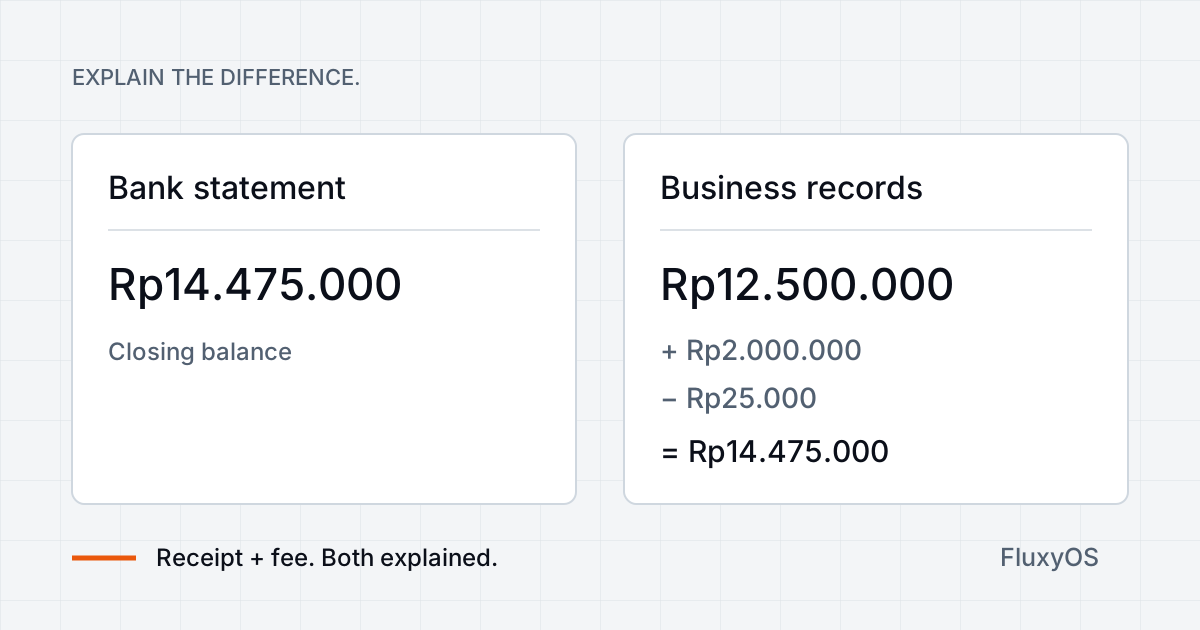
Compare balances for the same cutoff date. Differences can be timing differences, missing records, or errors. Record the explanation before treating a balance as reliable.
4. Leave a clear handoff for accounting
At the end of the day, list missing receipts, unresolved categories, unpaid customer invoices, unpaid supplier bills and unmatched movements. For each exception, record the amount, source reference, next action and owner. A small exception list is more useful than a declaration that everything is complete when evidence is missing.
Bookkeeping preserves the transaction trail. Accounting uses those records to assess recognition, adjustments and financial statements. Daily completeness makes that work easier; it does not replace an accountant’s review. The business.gov.au record-keeping guide is a general reference for organising records. Its Australian legal and retention requirements are not Indonesian rules.
5. Use the records in the next decision
Take the recorded costs into your monthly budget review. Take matched receipts and payments into your cash review. This connects daily operations to questions about spending and cash, rather than letting documents accumulate until month-end.
Receipt Capture helps bring receipt details into FluxyOS; review extracted fields against the original before saving. Explore Accounting Automation for the connection to accounting records. Good input and review remain part of the workflow.
Sources & further context
Source links checked on 19 October 2026. Examples and checklists are original FluxyOS explanations.