Budgeting
Budget variance analysis: explain price, volume and timing
Budget variance is the difference between actual results and the budget for the same period and scope. For expenses, this guide uses actual cost minus budget: a positive amount means overspending. Check the records first, then separate changes in activity volume, unit price and timing before deciding what to do.
1. Compare the same period and accounting basis
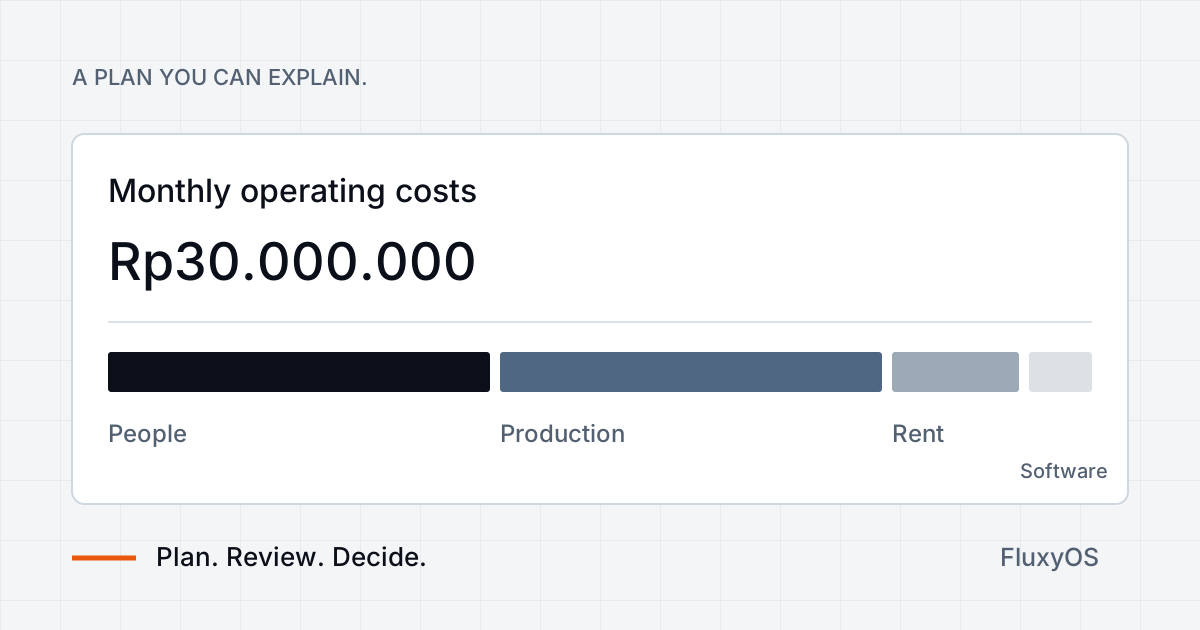
Keep a copy of the original budget and its assumptions. Compare the same business, cost category and period. A full-month budget and ten days of expenses answer different questions. Separate an updated forecast from the original plan so the reason for a change remains visible.
Australian Government budgeting guidance recommends regular comparison of actual results with the original budget. This guide applies that general workflow to an original Indonesian business example.
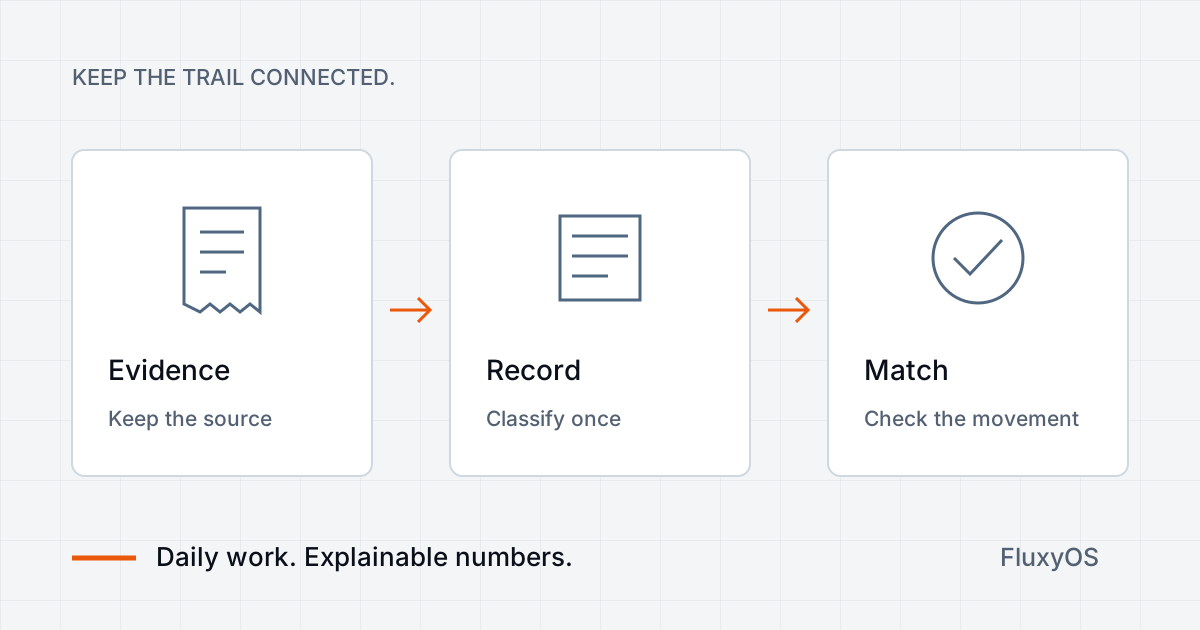
Check missing receipts, duplicates, misclassified costs and unrecorded bills using the daily bookkeeping checklist. Compare expense with expense, or cash payment with cash payment. Paying an old bill today does not necessarily make it this month’s expense.
2. Calculate the amount before interpreting the percentage
For expenses: variance = actual cost − budgeted cost. If the budget is greater than zero, percentage variance = variance ÷ budget × 100. State this sign convention in your report; some systems use the opposite sign.
Suppose an online shop plans 1.000 completed orders, each using one parcel of packaging at Rp2.000. It actually completes 1.200 orders and uses 1.200 identical parcels at Rp2.300 each. Assume no unused stock, waste, discounts, taxes or other packaging costs. These are hypothetical teaching figures, not customer results.
| Packaging measure | Budget | Actual |
|---|---|---|
| Completed orders and parcels used | 1.000 | 1.200 |
| Cost per parcel | Rp2.000 | Rp2.300 |
| Packaging cost | Rp2.000.000 | Rp2.760.000 |
The total overrun is Rp760.000, or 38% of the original Rp2.000.000 budget. That alone does not explain whether the shop used resources poorly. If the budget is zero, report the Rupiah difference and “not applicable” for the percentage; dividing by zero does not produce a useful comparison.
3. Separate higher volume from a higher unit price
Use a bridge that changes volume first while keeping the planned unit price, then changes the price at actual volume. ACCA’s budgeting explanation describes comparing actual results with a budget flexed to actual activity.
| Bridge from plan to actual | Calculation | Cost increase |
|---|---|---|
| More parcels at planned price | (1.200 − 1.000) × Rp2.000 | Rp400.000 |
| Higher price on actual parcels | 1.200 × (Rp2.300 − Rp2.000) | Rp360.000 |
| Total explained overrun | Rp400.000 + Rp360.000 | Rp760.000 |
At actual volume and planned price, packaging would cost Rp2.400.000. Actual cost is Rp360.000 higher. The other Rp400.000 reflects more orders under the one-parcel-per-order assumption. The bridge reconciles exactly to Rp2.760.000.
This simple split requires the same packaging specification and consumption rate. Investigate waste, extra parcels or a changed product mix separately if those assumptions fail. Do not multiply fixed rent by order growth. More sales can justify higher variable costs, but the extra revenue and margin still need checking.
4. Test whether a timing explanation is supported
Business Victoria’s budget guidance separates timing differences from changes that will not reverse. Keep evidence for whichever explanation you choose.
For example, a campaign planned for one month may move to the next. Keep the rescheduled dates, agreed scope and updated cash requirement. A supplier price increase that will continue needs a different response. Calling a difference “timing” does not remove its cash impact.
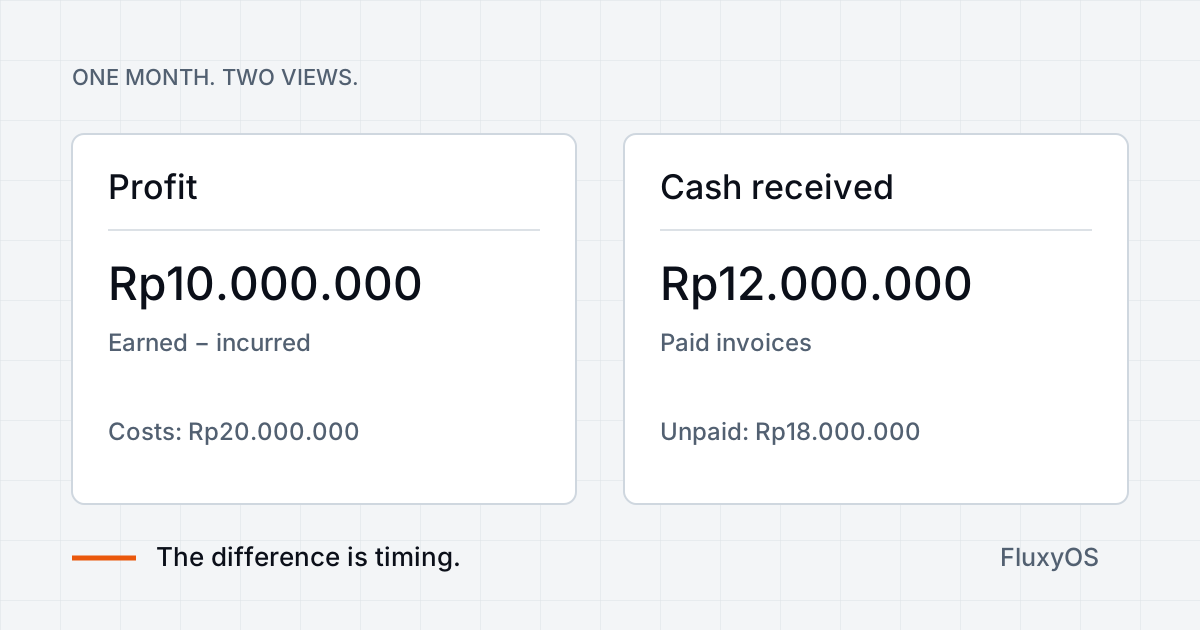
For an expense-based budget, a late invoice alone does not prove the expense belongs next month: check when the service was provided. For a cash-payment budget, use the payment date. Keep open commitments visible without counting them again as actual spending. The cash flow versus profit guide explains why the two views differ.
5. Finish the review with an owner and a decision
For the packaging example, record the original assumption, actual order count, supplier invoice, Rp400.000 volume effect and Rp360.000 price effect. Ask the purchasing owner to confirm the price and specification before the next order. Ask finance to check the margin on the additional sales.
Use one review row per material difference: category, original budget, actual, Rupiah variance, explanation, evidence, responsible person and next review date. A small recurring overrun may deserve attention even when a one-off difference is larger. Choose your review threshold for your business; this guide supplies no universal benchmark.
Keep the original budget intact and document any revised plan separately. Return to the monthly operating budget guide to update assumptions. For the FluxyOS product workflow, see Dynamic Budgeting. The price-and-volume bridge above is a manual worksheet you can maintain with your source records.
Sources & further context
Source links checked on 20 October 2026. Examples and checklists are original FluxyOS explanations.