Cash flow
Marketplace sales vs payout: explain the gap before you spend
Marketplace sales describe what you sold. A payout is money released and transferred after the settlement calculation. Fees, refunds, other adjustments and timing can make them different. Match the order records to the settlement breakdown and then to the bank; do not record the same sale again when the payout arrives.
1. Separate the sale, the settlement and the bank receipt
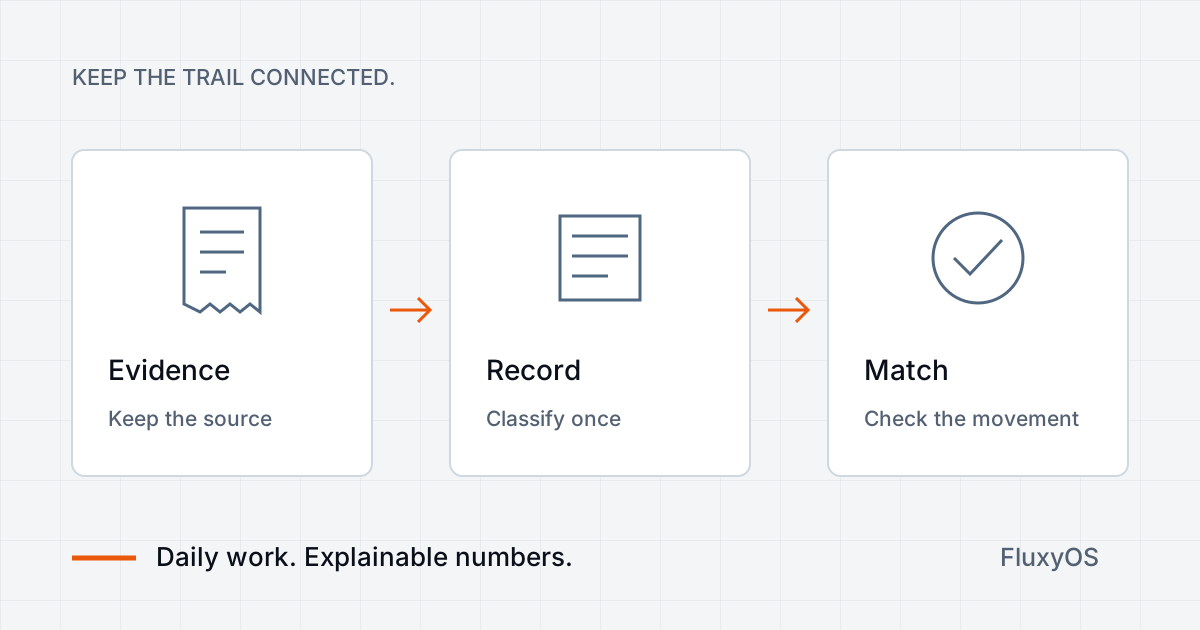
Keep three records together: the order or sales record, the marketplace settlement breakdown, and the bank movement. A sale answers what was supplied. A settlement explains what the platform owes after its adjustments. A bank receipt proves which transfer reached the account.
An order total alone does not establish recognised revenue. The IFRS Foundation’s IFRS 15 overview connects recognition to supplying the promised goods or services. This is a conceptual reference, not a statement that every Indonesian business must apply IFRS. Confirm the accounting basis and delivery evidence with your accountant.
For the worksheet below, assume completed sales by a seller acting as principal, with no opening marketplace balance. The figures are original teaching assumptions, not a platform tariff or customer result.
2. Build a bridge from sales to the amount released
Suppose a shop has Rp10.000.000 of completed product sales before the refund shown below. The settlement statement identifies Rp500.000 of refunds, Rp700.000 of seller fees and Rp300.000 still awaiting release. It transfers the remainder to the bank. Assume no shipping flows, seller vouchers, taxes, reserves or other adjustments.
| Settlement component | Amount | What to check |
|---|---|---|
| Completed product sales before this refund | Rp10.000.000 | Order-level records and delivery evidence |
| Less refunds in this settlement | Rp500.000 | Refund references; do not deduct twice |
| Less seller fees | Rp700.000 | Fee breakdown and supporting documents |
| Less amount not yet released | Rp300.000 | Settlement status and later release |
| Bank payout | Rp8.500.000 | Actual bank receipt and transfer reference |
The bridge is Rp10.000.000 − Rp500.000 − Rp700.000 − Rp300.000 = Rp8.500.000. In this simplified example the post-refund sales amount is Rp9.500.000. Fees are a separate cost, and the Rp300.000 timing item remains an amount to track. The Rp8.500.000 received is not profit: product cost and the shop’s other expenses are absent from this calculation.
The fees here are hypothetical nominal amounts. Shopee’s seller terms describe seller charges and allow fee changes. Use the actual terms and statements for your seller account; do not apply this example as a Shopee or Tokopedia rate.
3. Explain each deduction before choosing its accounting treatment
A deduction is not automatically an operating expense. Identify the economic event first.
- Refund: connect it to the original order and check whether the sales record already includes it.
- Seller fee: retain its description and supporting document. Keep it separate from product cost when reviewing unit economics.
- Delayed release: follow the settlement status and subsequent payment. A timing difference alone is not proof of a loss.
- Unexplained adjustment: keep it open with a reference, owner and next action. Ask the platform for an explanation rather than inventing a balancing entry.
The IFRS Foundation’s principal-versus-agent discussion explains that the business’s role matters to gross or net revenue presentation. Our example assumes the shop sells its own goods as principal. Do not generalise it to an agent earning only a commission. Shipping, vouchers and tax deductions also need their own evidence and applicable treatment; this guide does not set their rules.
4. Match the payout without creating a second sale
Record each underlying event once. If sales and the marketplace amount receivable are already recorded, the later bank receipt settles that amount; it is not another sale. Keep separate references for fees, refunds and any unpaid balance. The exact journal accounts depend on your accounting policy and the facts.
Use a worksheet with order ID, sales date, settlement ID, fee/refund reference, release status, bank date and bank reference. One deposit can cover many orders, and one period’s orders need not all settle in that period. Compare records at the same cut-off date.
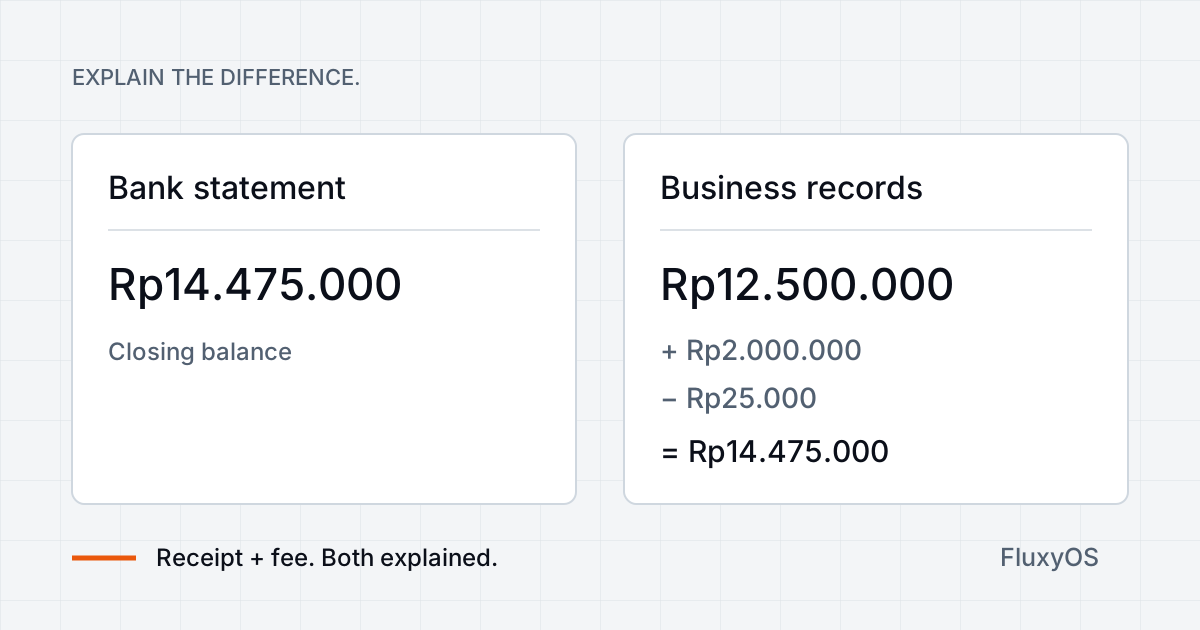
When the deposit does not match, follow the bank reconciliation example. It explains how to separate missing records, errors and timing differences without forcing the totals.
5. Use the difference in the next operating decision
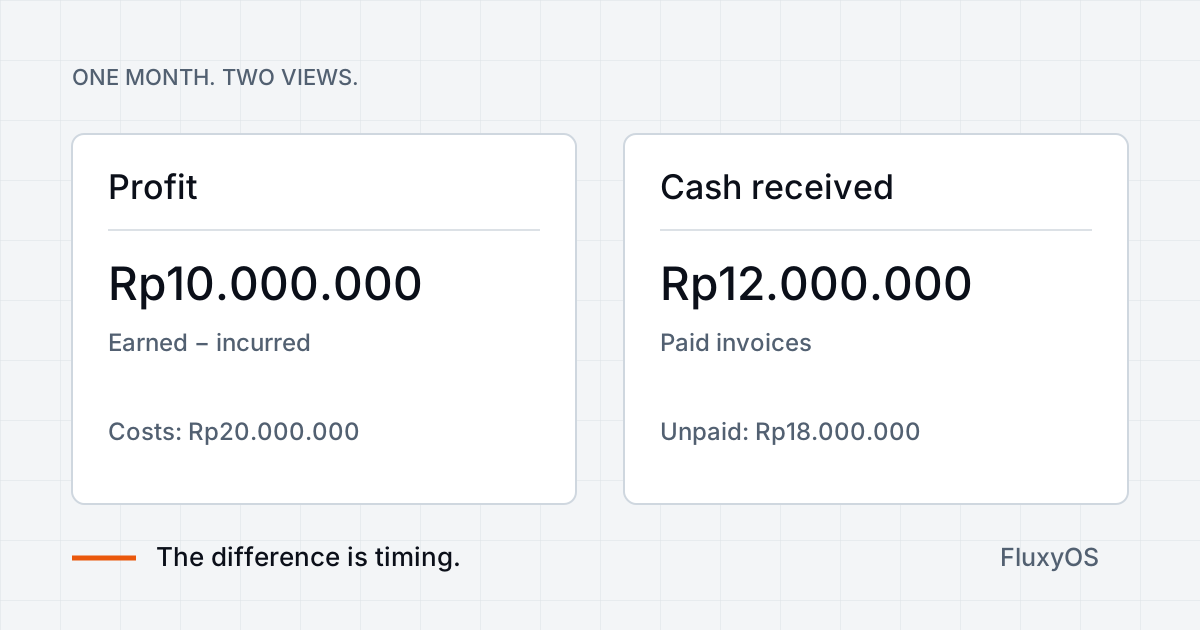
Review post-refund sales, seller fees, product cost and other fulfilment costs separately before assessing margin. Review released cash and unsettled amounts separately before committing to supplier payments. A higher sales total does not tell you which cash is spendable today.
Carry recurring fees into your monthly operating budget, and keep the settlement evidence in your daily bookkeeping routine. The cash flow versus profit guide connects the timing gap to the wider business picture.
This is a manual review worksheet. For product context, explore Revenue Sync. Verify the supported channel and available data for your connection before relying on it for a reconciliation; this guide does not promise automatic payout matching or complete settlement coverage.
Sources & further context
Source links checked on 19 October 2026. Examples and checklists are original FluxyOS explanations.